
This quarter, Hillman Scholars published new work spanning global health, maternal and adolescent health, health…
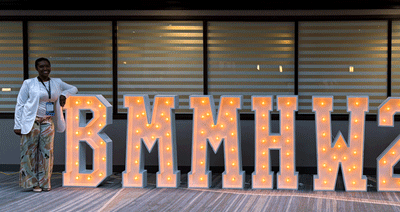
The beginning of 2025 was marked by uncertainty for many researchers, as some of the major funding mechanisms integral to supporting the scientific complex were experiencing unprecedented changes. As a PhD student, I had felt the impact of these abrupt shifts deeply; my dream fellowship dissolving along with the countless hours spent writing and refining my ideas, and the years of academic preparation behind them. The fate of my application at the time was unknown. My work had been rerouted, and anticipated feedback was delayed, leaving me with a sense of uncertainty about the next steps for progressing my research career.
The call for applications for the Hillman Bridge Award, a small grant fellowship open to Hillman Scholars in Nursing Innovation who were experiencing gaps in research funding, came at a time when I needed it most.
I knew I couldn’t let the opportunity to apply pass me by, so I pulled myself together and submitted a grant application for review and consideration. When I was notified that I had received the award, I was overjoyed to have the opportunity to continue advancing my dissertation study, titled “Combating the Crisis: A Multi-Method Approach to Investigating Mindfulness, Stress, and Cardiometabolic Risk in Reproductive-Aged African American Women”, and I intended to take full advantage of the resources provided by the award.
Through the Hillman Bridge Award, I was able to:
- successfully defend my dissertation proposal and transition into PhD candidacy,
- establish the foundation for my dissertation analyses,
- begin analyzing qualitative interviews for the qualitative aim of my dissertation study,
- increase my scientific productivity and impact by presenting an oral presentation at a national conference,
- submit a publication to an academic journal, and
- develop an abstract for an international conference.
For doctoral students, the gravity of funding support is weighed by factors that extend beyond research development, as scholarships and grants are often necessary to maintain our health, well-being, and livelihood as full-time students. The funds provided by the award not only promoted my professional development, but also provided me with the time and mental capacity to remain dedicated and focused on my academic journey.
I found that the rejection that led me to redirect my path through the Hillman Bridge Award had allowed me to gain invaluable insights and experiences that would’ve otherwise remained unlearned at this point of my scientific journey, such as:
- The importance of diversifying your funding portfolio.
- Grant writing for various funding mechanisms.
- Remaining adaptable to pivots in your scientific journey.
I hope that this post inspires fellow Hillman Scholars to take the leap to apply for funding opportunities provided by the Rita and Alex Hillman Foundation, as they empower students to maintain autonomy over their academic journey and support our ability to advance our professional careers and respective areas of research.